How High-Quality Training Data is Shaping the Next Generation of LLMs

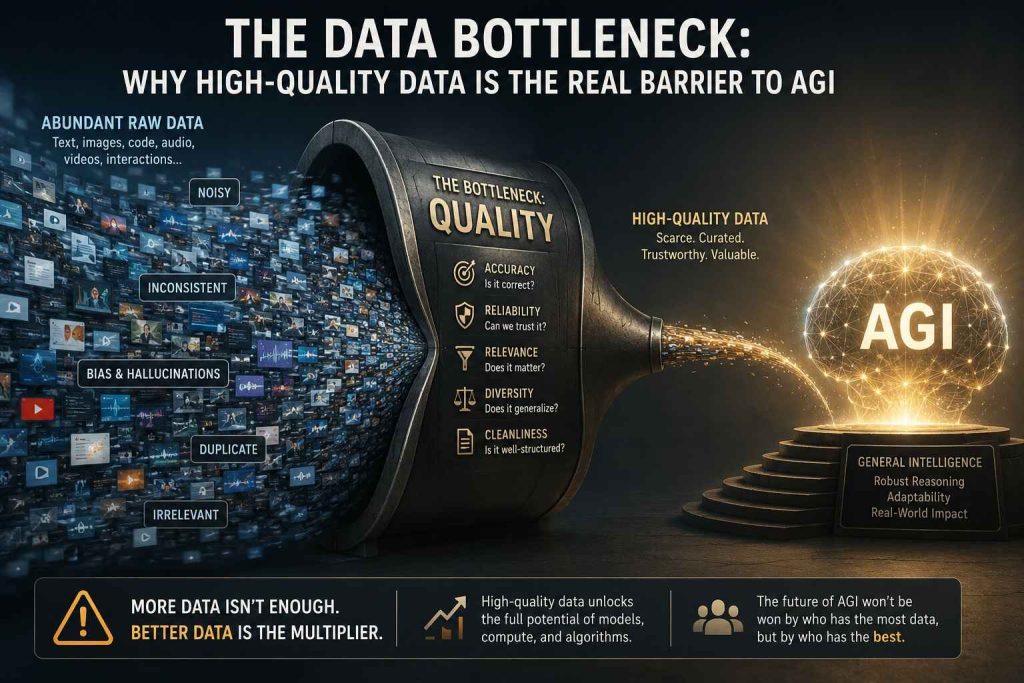
Large Language Models (LLMs) have captured the world’s imagination. From ChatGPT to Gemini, these models can write code, summarize documents, and even reason through complex problems. But beneath the impressive capabilities lies a simple, often overlooked truth: an LLM is only as good as the data it learns from. As the AI industry moves beyond

How High-Quality Training Data is Shaping the Next Generation of LLMs Read More »

Top 5 Mistakes in Audio Transcription for AI Training (and How to Fix Them)

Voice is everywhere in AI. Speech recognition engines, voice assistants, call center analytics, meeting summarizers, podcast search tools, multilingual LLMs — all of them depend on one foundational ingredient: high-quality transcribed audio data. Yet audio transcription remains one of the most underestimated steps in the AI training pipeline. Teams invest heavily in model architecture, compute,

Top 5 Mistakes in Audio Transcription for AI Training (and How to Fix Them) Read More »

Text Annotation for NLP: A Practical Guide to Intent, Entity, and Sentiment Labeling

Introduction: Why Text Annotation Is the Backbone of NLP Every time a virtual assistant understands your request, a customer support bot detects frustration in a ticket, or a search engine surfaces the right result — text annotation for NLP is working behind the scenes. Without carefully labeled training data, even the most sophisticated language models

Text Annotation for NLP: A Practical Guide to Intent, Entity, and Sentiment Labeling Read More »

Audio Data Collection for Speech AI: What Quality Really Means (With Benchmarks)

Speech AI teams spend months tuning model architectures, experimenting with loss functions, and benchmarking inference latency. Then their model ships — and underperforms in production. When they dig into the failure, the culprit is almost never the model. It is the training data. Bad audio data is the silent killer of speech AI projects. It

Audio Data Collection for Speech AI: What Quality Really Means (With Benchmarks) Read More »

How to Choose an AI Data Annotation Partner: 7 Questions to Ask Before Signing

Your AI model is only as good as the data it learns from. You already know that. What many teams discover too late is that their annotation partner — the company labeling that data — can quietly determine whether a model ships on time, performs in production, or quietly fails in the real world. With

How to Choose an AI Data Annotation Partner: 7 Questions to Ask Before Signing Read More »

Integrating Data Annotation into Your ML Pipeline (CI/CD)

Machine learning teams have mastered CI/CD for code.But when it comes to data and annotation workflows, many organizations still operate manually — outside their ML pipeline. That’s a problem. In modern AI systems, data is not static. Models drift. Edge cases appear. New use cases emerge. Without integrating data annotation into your CI/CD pipeline, you

Integrating Data Annotation into Your ML Pipeline (CI/CD) Read More »

Retail & E-commerce Annotation: Powering Recommendation Engines

In modern retail and e-commerce, personalization is no longer optional. Customers expect: Behind all of this?High-quality annotated data. Recommendation engines don’t improve on algorithms alone — they improve with better structured, labeled, and enriched datasets. In this blog, we explore how data annotation powers retail recommendation engines — and how Synnth.ai helps e-commerce brands scale

Retail & E-commerce Annotation: Powering Recommendation Engines Read More »

How to Structure Annotation Projects for Maximum Efficiency

Data annotation is not just a task — it’s an operational system. When annotation projects are poorly structured, organizations experience: On the other hand, well-structured annotation workflows can: In this guide, we’ll break down exactly how to structure annotation projects for maximum efficiency — and how Synnth.ai helps AI teams scale high-quality labeled data operations

How to Structure Annotation Projects for Maximum Efficiency Read More »